The Synthetic Seesaw: Bitget's ANET Perpetual and the Geometry of Shadow Markets
CryptoSam
The line between traditional finance and crypto is not blurring — it's being erased by a new kind of financial engineering. Last week, Bitget announced the listing of Arista Networks (ANET) perpetual contracts, adding yet another stock to its growing stable of 272 synthetic assets. On the surface, it's a routine product expansion. But for those of us who have spent years dissecting the oracle mechanisms of prediction markets and the invariant curves of DeFi, this is a quiet revolution in how we define ownership, risk, and access.
Let me take you inside the geometry of this trade. A perpetual contract is a seesaw. One side is the price of ANET on Nasdaq, fed into Bitget's engine through a centralized oracle — likely a consortium of market makers and data providers like Pyth or Chainlink. The other side is your USDT margin, leveraged up to 20x. The fulcrum is the funding rate, which balances the seesaw between longs and shorts. But here's the catch: the seesaw is not on the playground of traditional finance. It's in a sandbox built by Bitget. The rules — margin requirements, liquidation thresholds, even the oracle itself — are controlled by a single entity. Open source isn't a philosophy of transparency; it's a commitment to verifiable truth. This product has neither.
From my early days auditing the Augur and Gnosis prediction markets, I learned that the weakest link in any synthetic asset is the price feed. In 2017, I found three logic flaws in Augur's oracle that could have allowed a malicious actor to manipulate outcomes. The fix was a multi-signature governance mechanism. But Bitget's oracle is a black box. We don't know how many data sources they use, what happens during a flash crash, or whether the insurance fund can withstand a 20% gap in ANET during a 24/7 trading session. We didn't need a regulatory green light to trade the future; we just needed a smart contract and a centralized exchange willing to take the risk. But that risk is passed on to you.
Now, let's talk about the underlying asset. Arista Networks is the backbone of AI data centers. Its switches route the traffic that trains large language models. By listing ANET, Bitget is tapping into the AI narrative — a story that has captured the crypto community's imagination. But this is not a tokenized stock. It's a synthetic derivative, settled in USDT. You are not buying ANET; you are buying a contract that mirrors its price. The difference is profound. When you own the stock, you have voting rights, dividends, and a claim on the company's assets. Here, you have a position on a centralised ledger, subject to the whims of the exchange. This is the empowerment narrative of DeFi inverted: instead of freeing assets from intermediaries, we are creating new intermediaries that mimic the old ones.
I've been through three bear markets and two DeFi summers. I've seen the hubris of leverage firsthand. In 2022, I wrote a post-mortem on Three Arrows Capital, tracing how a 5x leverage on illiquid positions led to a systemic collapse. The same physics apply here. With 20x leverage on a single stock, a 5% move against you wipes out your entire margin. The funding rate, which can spike during volatile periods, eats away at your position like a slow leak. The product is designed for velocity, not for value. The real question is: who benefits?
Let's run the contrarian angle. The obvious winners are Bitget and its token holders. Every trade generates fees, a portion of which flows into the BGB buyback mechanism. But the hidden winners are the market makers who provide liquidity. They can hedge their positions in the traditional market, arbitraging the synthetic and real prices. The losers? The retail traders who chase the AI narrative without understanding the geometry of risk. They are the ones who will get liquidated when the seesaw tips.
There's a deeper philosophical issue here. Decentralization is not a tech stack; it's a philosophy of transparency. By creating a synthetic shadow market for ANET, Bitget is offering a way to trade American stocks without American regulations. This is a feature, not a bug. It's the same logic that drove the rise of CFD trading in the UK before the FCA banned it. The difference is that crypto has no single regulator. The product is legal in Seychelles, available in Asia, and a grey area in Europe. But the moment a major regulator — say, the SEC or the FCA — decides to act, the entire product line could vanish overnight. The risk is not theoretical; it's existential.
I've been mentoring female digital artists on NFT provenance, and I see a parallel. The ownership of an NFT is only as strong as the chain it lives on. Here, the ownership of a synthetic stock is only as strong as the exchange that issues it. If Bitget gets hacked, goes bankrupt, or faces a regulatory shutdown, your position is worthless. There is no insurance, no deposit protection. You are trusting a company with a website and a license from a small island nation.
So what's the takeaway? This is not a story about Bitget or ANET. It's a story about the evolution of financial markets. We are building bridges between traditional and crypto assets, but the bridges are made of paper. The next step is to make them verifiable, transparent, and resilient. Until then, trade with your eyes open. The seesaw moves fast, and the ground is further away than you think.
You May Like

The Asian Stock Rally That Didn't Happen: A Macro Liquidity Mirage
2026-08-15
The Distillation Crackdown: AI Model Theft as a Catalyst for Decentralized Compute
2026-07-12
The Dogecoin Founder and the Strategy Mirage: When Narratives Feed on Nothing
2026-07-04
The Osimhen Premium: Why the Transfer Market is a Liquidity Game
2026-07-28
XRP Whale Activity Surges 280% as Price Fractures at $1.00: A Forensic On-Chain Breakdown
2026-08-18Related

Solana's $378M T-Bill Surge: A Data Detective's Autopsy
2026-08-16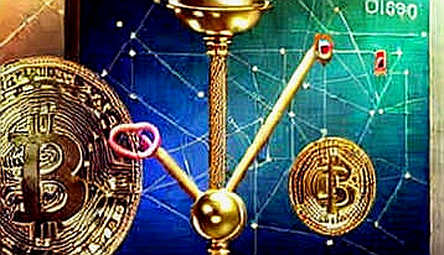
The Pulse at the Strait: Oil, DeFi, and the Decoupling Narrative
2026-07-29
The AI Pivot Mirage: Why Crypto Treasury Firms Are Dying a Second Death
2026-07-28
The AI Agent Security Trap: Why Cheap Models Won't Save Your Keys
2026-07-17
The Single Entity Trap: Why the US Sanctions on Venezuela Are a Liquidity Test, Not a War
2026-08-19
BIP-110 Force Signal: The 48-Hour Ultimatum Bitcoin Didn't Ask For
2026-08-08
Ethereum's Energy Crash: The Quiet Infrastructure Shift Beneath the ESG Narrative
2026-07-11
The $4B Energy Signal: Why Crypto's Liquidity Trap is Already Set
2026-08-16
The 87% Gap: Auditing Yuegangwan's 150B AI Compute Intention Orders Through a Systems Lens
2026-07-04
The 52% Illusion: Deconstructing Writer's Palmyra X6 Cost Claim, Data Missing
2026-08-14
The Commitment Ledger: How One Protocol Is Betting $319 Million on Culture Over Hype
2026-07-27
The Yield Curve Bends, But the Logic Holds Firm: Bessent’s Fiscal Dominance and the Crypto Escape Valve
2026-08-10
Data Integrity Failure: Cannot Generate Analysis
2026-08-15
Tokenized Stocks: The Only Altcoin Narrative That Survives the Unlock Tsunami
2026-07-04